Business
Legal Music for Business 2026 — Royalty-Free, PRO-Cleared Streaming for Cafés, Salons, Shops
Complete 2026 guide for café, restaurant, salon, gym and retail owners: avoid ASCAP/BMI/PRS/SACEM/GEMA fines, replace Spotify in your business, and run PRO-cleared royalty-free background music legally with Tunio.
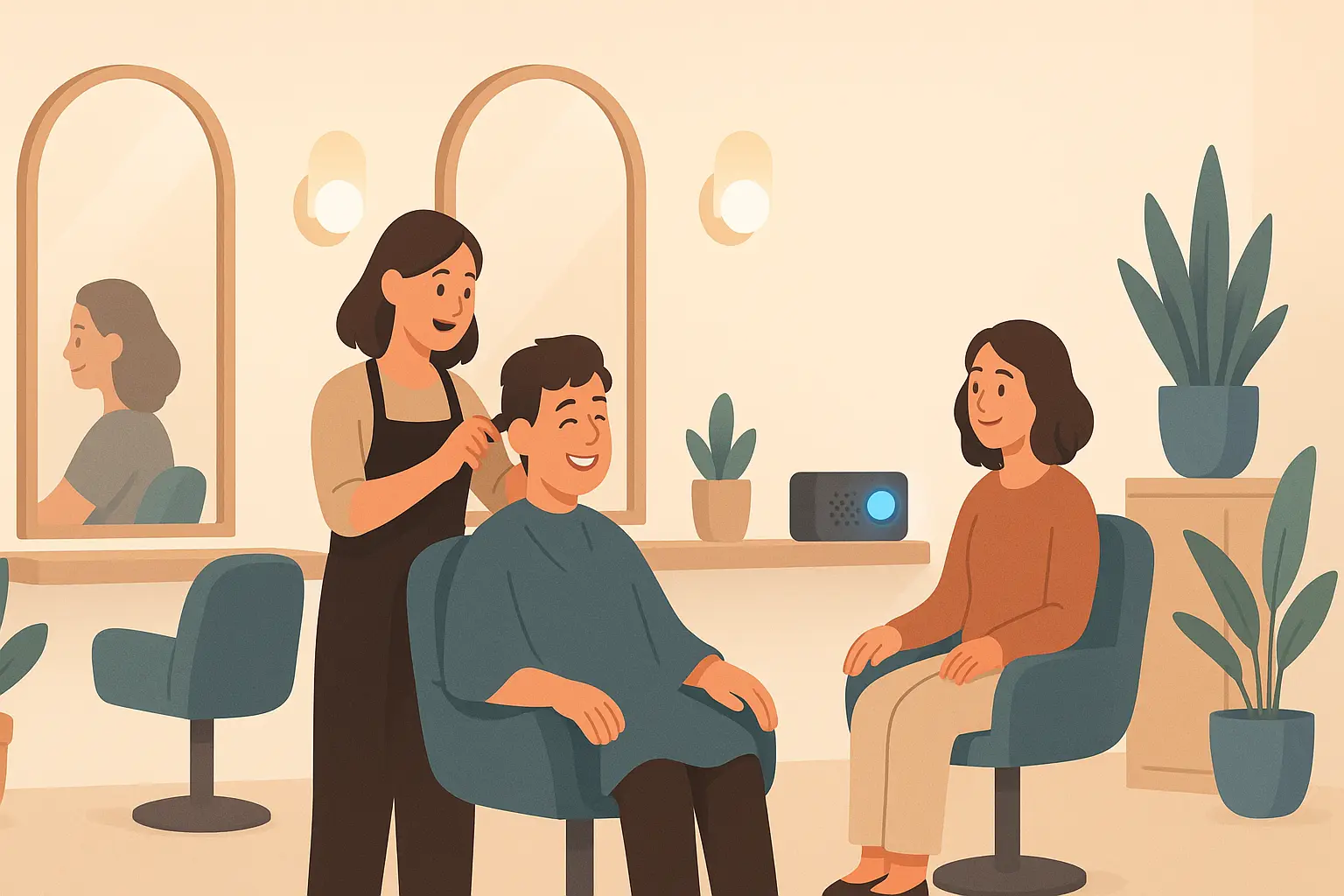
Legal Music for Business in 2026: The Complete Western Guide
Playing the wrong song in your café, salon or retail floor can cost you up to $30,000 per track in the United States — and up to $150,000 per work for willful infringement under 17 U.S.C. § 504. PRS for Music in the UK, GEMA in Germany and SACEM in France pursue similar damages. The hard part is that most business owners do not even know they are infringing: they pay for personal Spotify, Apple Music or YouTube Music and assume their subscription covers what plays through the speakers above the bar. It does not.
This guide explains, in plain English, exactly what is and is not legal for background music in a Western business in 2026, what the Performing Rights Organizations (PROs) in each major country actually charge, what happens when a venue gets caught, and the five realistic paths to compliance — including AI-generated platforms like Tunio that sidestep PRO licensing entirely.
The reality check: A single ASCAP, BMI or SESAC inspector visit can result in statutory damages between $750 and $30,000 per song under U.S. copyright law — even if you played the track only once. PROs send investigators to bars, restaurants, gyms and salons every week. They keep audio recordings and dated reports as evidence.
Why Your Spotify Subscription Is Not Legal for Business Use
This is the question Google sees thousands of times per month: "Can businesses legally use music from Spotify for commercial purposes?" The answer is no, and Spotify says so itself.
What Spotify's Terms of Service Actually Say
The Spotify Terms of Use (Section 8) state that the service is "only for your personal, non-commercial entertainment use." A 2017 Spotify announcement made this explicit: "Spotify is a consumer service, intended for personal use. Spotify must not be used in commercial establishments, such as restaurants, bars, retail stores or other public venues."
If you play Spotify in a café, salon, gym or shop, you are violating Spotify's ToS and infringing the public-performance rights of the songwriters and publishers behind every track. Two violations, one cup of coffee.
Apple Music, YouTube Music and Amazon Music
Every major consumer streaming service has the same restriction.
- Apple Music (Section H of the iCloud Terms): "The Apple Music Service and any content received through the Apple Music Service is for personal, non-commercial use."
- YouTube (Terms of Service, Section "Permissions and Restrictions"): YouTube content is licensed for personal, non-commercial use. Playing YouTube playlists over speakers in a venue is explicitly prohibited.
- YouTube Music: Same restriction. The Premium tier removes ads for the listener — it does not unlock a commercial license.
- Amazon Music Unlimited / Prime Music: Section 3 of the Conditions of Use restricts the service to personal, non-commercial purposes.
"But I Already Pay $10.99/Month"
That $10.99 covers a mechanical/streaming license between Spotify and the rights holders for private playback into one set of headphones. The moment the audio leaves your personal device and enters a public space, copyright law treats it as a public performance — an entirely separate right that must be cleared through a PRO. Your subscription does not include it. Spotify cannot grant it. Only PROs and licensed B2B services can.
Performing Rights Organizations (PROs) by Country
Every Western country has one or more PROs that collect public-performance royalties on behalf of songwriters and publishers. If you play commercial music in a business, you need a blanket license from each PRO operating in your country.
| Country | PROs you must license | Typical small-venue cost / year |
|---|---|---|
| USA | ASCAP, BMI, SESAC, GMR | $300 – $1,200 per PRO (×4) |
| United Kingdom | PRS for Music and PPL (combined as TheMusicLicence) | £350 – £1,800 |
| Germany | GEMA | €350 – €2,500 |
| France | SACEM (composers) and SPRÉ (performers) | €300 – €1,800 |
| Italy | SIAE | €400 – €2,200 |
| Spain | SGAE, AGEDI, AIE | €400 – €2,000 |
| Canada | SOCAN and Re:Sound | CA$ 110 – CA$ 1,500 |
| Australia | APRA AMCOS and PPCA | AU$ 300 – AU$ 3,500 |
| Netherlands | Buma/Stemra and Sena | €350 – €1,800 |
The "small-venue" range above assumes a café, salon, gym or independent shop under 150 m² / 1,600 sq ft, open standard business hours, with one set of speakers. Larger floor area, longer hours, multiple zones, dance floors or amplified live events all push the price up — often dramatically. In the U.S. you must license all four PROs because each represents a non-overlapping catalogue: if you only sign with ASCAP, a BMI-represented song can still trigger a separate lawsuit.
What Happens When a Business Ignores PRO Licensing
PROs are not gentle. Their entire business model is built on enforcement, and they have decades of case law behind them.
Real Court Outcomes (U.S., UK, EU)
- BMI v. Evie's Tavern (Florida, 2014) — A small bar in Sarasota was sued for playing four unlicensed songs. The federal court awarded BMI $30,450 in statutory damages plus $9,000 in attorneys' fees — for four songs.
- ASCAP v. Stellar Records (New Jersey, 2018) — A restaurant operator was fined $24,000 for four songs plus $8,200 in legal fees after declining ASCAP's $4,500/year offer.
- PRS for Music v. Bluefin Pub (UK, 2022) — A London publican was hit with a £19,000 settlement plus a county court judgment after persistent unlicensed playback. PRS publicly notes that repeat offenders can face criminal prosecution.
- GEMA v. Gym chain (Germany, 2019) — A Berlin fitness studio paid €42,000 in back-licensing and damages after GEMA inspectors documented two months of unlicensed Spotify playback.
- SACEM v. Hotel Jardin (France, 2021) — A boutique hotel was assessed €10,000 in penalties plus back-fees after a SACEM mystery-shopper visit.
How PROs Find You
In the U.S., ASCAP and BMI run dedicated field-licensing teams. Their playbook:
- An undercover field rep visits your venue as a customer and writes down the tracks playing (or records them with a smartphone-grade Shazam-style tool).
- They cross-reference the setlist against their catalogue. Almost any commercial Western pop, jazz, or hip-hop track will match at least one PRO.
- A licensing offer arrives by certified mail. If you ignore it, the second letter is from their legal department.
- If you still ignore it, you get sued in federal court — and you almost always lose, because the PRO holds the registered copyright certificates and the field rep's signed declaration.
UK PPL/PRS, GEMA, SACEM and APRA AMCOS all use variations of the same workflow.
The Five Legal Paths to Compliant Business Music
1. License Directly From PROs
The traditional route: contact ASCAP, BMI, SESAC, GMR (US), or TheMusicLicence (UK), GEMA, SACEM, etc., and pay annual blanket fees. Pros: you get access to virtually all commercial Western music. Cons: in the U.S. you pay four PROs simultaneously; pricing is opaque; nothing handles curation, scheduling or announcements — you still need a separate playback system.
2. Spotify for Business (via Soundtrack Your Brand)
Critical distinction: personal Spotify is illegal for business; "Spotify for Business" is a separate product operated by Soundtrack Your Brand in partnership with Spotify. It uses a different catalogue (curated for commercial use), includes the public-performance license in the price, and starts around $26.99/month per location. It does not unlock your personal playlists — the catalogue is curated by Soundtrack, not picked by you.
3. Dedicated B2B Music Services
The U.S. market is dominated by a handful of providers:
- Soundtrack Your Brand — $26.99–$34.99/location/month. Strong scheduling, weak announcement workflow.
- Mood Media — Custom enterprise pricing (typically $40–$80/location/month). Heavy on hardware, slow to roll out.
- Cloud Cover Music — From $26.95/location/month. Smaller catalogue, simple interface.
- Rockbot — $35–$50/location/month. Strong for guest jukebox features in bars.
- Pandora for Business — From $26.95/location/month. Algorithmic stations, limited control.
All five include PRO licensing in the price. None offer AI-generated jingles or daypart-aware voice announcements out of the box.
4. Royalty-Free / Stock Music Libraries
Platforms like Soundstripe, Audiio, Epidemic Sound and Artlist license tracks under "creator-friendly" terms that usually permit commercial public performance — but you must read the fine print. Epidemic Sound's "Personal" plan does not cover in-store playback; you need their "Commercial" tier (~$49/month). Soundstripe and Audiio's standard plans do cover venue playback. These libraries are smaller (5,000–40,000 tracks) than PRO catalogues but pre-cleared, with no PRO involvement.
5. Tunio — AI-Generated, Pre-Cleared Catalogue
Tunio sits in a new category: every track in the catalogue is AI-generated and 100% owned by Tunio, which means there are no underlying songwriters, no publishers, and therefore no PRO to pay. The catalogue is cleared once, end-to-end, and the licence is included in every Tunio subscription. On top of the catalogue, Tunio adds:
- Daypart scheduling — different energy levels for morning, lunch, dinner, late-night
- AI brand-voice announcements — voice inserts generated in your venue's tone, scheduled by time and zone
- Multi-location control — central templates with branch-level overrides
- Jingle generator — custom AI jingles with your brand name, on demand
- Zero per-track royalties — flat monthly fee covering everything
The Tunio shortcut: because Tunio music is AI-generated and Tunio owns 100% of the rights end-to-end, there is no PRO licence to negotiate, no per-song royalty exposure, and no field investigator who can issue a fine. You sign one contract and you are done. Cost typically lands at 70–90% below comparable Soundtrack Your Brand or Mood Media plans.
Why Tunio Is the Most Pragmatic 2026 Choice
| Dimension | Personal Spotify | Soundtrack / Mood / Cloud Cover | Tunio |
|---|---|---|---|
| Legal for venue playback | No | Yes | Yes |
| PRO licensing included | No | Yes | Not required (AI-owned) |
| Multi-location dashboard | No | Limited | Native |
| Daypart scheduling | Manual | Basic | Native, per zone |
| AI brand-voice announcements | No | No | Native |
| Custom jingles with brand name | No | Manual/extra | One-click AI jingle |
| Typical monthly cost (1 location) | $10.99 (illegal) | $26–$80 | From $10/month |
| Same price across countries | n/a | Varies | Yes — global flat pricing |
Tunio integrates naturally with the rest of your background-music stack. Cross-links worth exploring:
- Spotify for Business alternative for venues
- Business background music on autopilot
- Music for multiple locations
- Business music scheduling software
Frequently Asked Questions
Can I play Spotify in my business legally?
No. Spotify's Terms of Use restrict the service to personal, non-commercial use, and your personal subscription does not include public-performance rights. Playing Spotify in a café, salon, gym or shop is a breach of contract with Spotify and a copyright infringement against every songwriter on the playlist. The legal alternative is "Spotify for Business" via Soundtrack Your Brand — a different product — or a venue-grade service like Tunio.
Do I need a license to play music in my café?
Yes, in essentially every Western country. In the U.S. you need licences from ASCAP, BMI, SESAC and GMR. In the UK you need TheMusicLicence (PPL + PRS combined). In Germany — GEMA. In France — SACEM. The only legal way around PRO licensing is to play music that is not represented by any PRO, such as fully-licensed royalty-free libraries or AI-generated catalogues like Tunio.
How much does a background music license cost for a restaurant?
For a small independent restaurant under 150 m² / 1,600 sq ft, expect $700 – $2,500 per year in the U.S. (combined across ASCAP, BMI, SESAC and GMR), £350 – £1,200 in the UK, €500 – €1,800 in Germany or France. Larger venues, longer hours, dance floors, and live music add multipliers. A B2B service like Soundtrack Your Brand or Tunio bundles the licensing into a flat monthly fee — usually cheaper end-to-end than negotiating with four PROs separately.
What is the penalty for playing copyrighted music without a license?
Under U.S. copyright law (17 U.S.C. § 504), statutory damages range from $750 to $30,000 per infringed work, rising to $150,000 per work for willful infringement. In the UK, PRS and PPL can claim back-licence fees plus damages and costs — settlements of £5,000 – £25,000 are routine for small venues. In Germany, GEMA can charge double the standard licence fee plus damages. Real court cases have hit small restaurants with $24,000 – $42,000 settlements for as few as four songs.
Is YouTube allowed for business music playback?
No. YouTube's Terms of Service license content for personal, non-commercial use only. Playing YouTube playlists or YouTube Music over speakers in a venue is a double violation — breach of YouTube's ToS and infringement of public-performance rights for every video. There is no "YouTube for Business" music product; the closest equivalent is YouTube's separate "Audio Library" of royalty-free tracks, which is intended for use inside videos, not as in-venue background music.
What is the difference between royalty-free music and PRO-cleared music?
PRO-cleared music is commercial music whose public-performance rights have been licensed through a Performing Rights Organization (ASCAP, BMI, PRS, GEMA, SACEM, etc.). You pay an annual blanket fee to play it. Royalty-free music is licensed under a single upfront or subscription fee — typically from a stock library like Soundstripe, Epidemic Sound or Audiio — with no per-play royalties and (usually) no PRO involvement. AI-generated platforms like Tunio go one step further: the music is AI-owned end-to-end, so there is no underlying composer, no publisher, and no PRO to pay at all.
Can I use Apple Music in my restaurant?
No. The Apple Music Terms of Service restrict the service to personal, non-commercial use. The same is true of Amazon Music Unlimited and YouTube Music. None of the major consumer streaming services include public-performance rights — they cannot, because those rights belong to the PROs, not to Apple, Amazon or Google.
Do small venues need a music license?
Almost always, yes. The U.S. has a narrow homestyle exemption under 17 U.S.C. § 110(5) — see below — but it does not cover digital streaming or curated playlists. The UK, Germany, France, Italy, Spain, the Netherlands, Canada and Australia have no size-based exemption at all: any business that plays music in a public space owes a licence, even a one-person hair salon or a corner kiosk.
What is the homestyle exemption in U.S. copyright?
Under the Fairness in Music Licensing Act of 1998 (codified as 17 U.S.C. § 110(5)(B)), small establishments may play transmissions of broadcast radio or TV through ordinary consumer equipment without a PRO licence, subject to strict limits: restaurants and bars must be under 3,750 sq ft, retail stores under 2,000 sq ft, with no more than six external speakers and specific room-coverage restrictions. The exemption applies only to broadcast retransmission — it does not cover Spotify, Apple Music, YouTube, CDs, your own iTunes library, or any digital streaming service. Most small businesses cannot rely on it.
Does Tunio cover my venue in any country?
Yes. Tunio's catalogue is AI-generated and Tunio owns 100% of the rights worldwide, so there is no country-by-country PRO negotiation. The same subscription works in the U.S., UK, EU, Canada, Australia and elsewhere — and the price does not change based on where your venue is located.
Stop Risking $30,000 Per Song — Start Free With Tunio
The math is simple. A single ASCAP visit can cost you more than ten years of B2B music subscriptions. Tunio replaces personal Spotify in your venue with a fully-cleared, AI-generated catalogue, daypart scheduling, brand-voice announcements and multi-location control — for a flat monthly fee, with no PRO exposure anywhere in the world.
This guide provides general information about music licensing in 2026 and is not legal advice. For specific situations consult a qualified intellectual-property attorney in your jurisdiction.
Have Questions About Your Venue?
If you'd like a hands-on walkthrough of how Tunio fits your café, salon, gym, restaurant or retail chain — and how much you'd save versus your current setup — contact our team: